When there is money for one child, we will fund the daughter
We have written this rule into the scholarship. Here is the reasoning, in full, so that nobody has to guess at it or be embarrassed to ask.
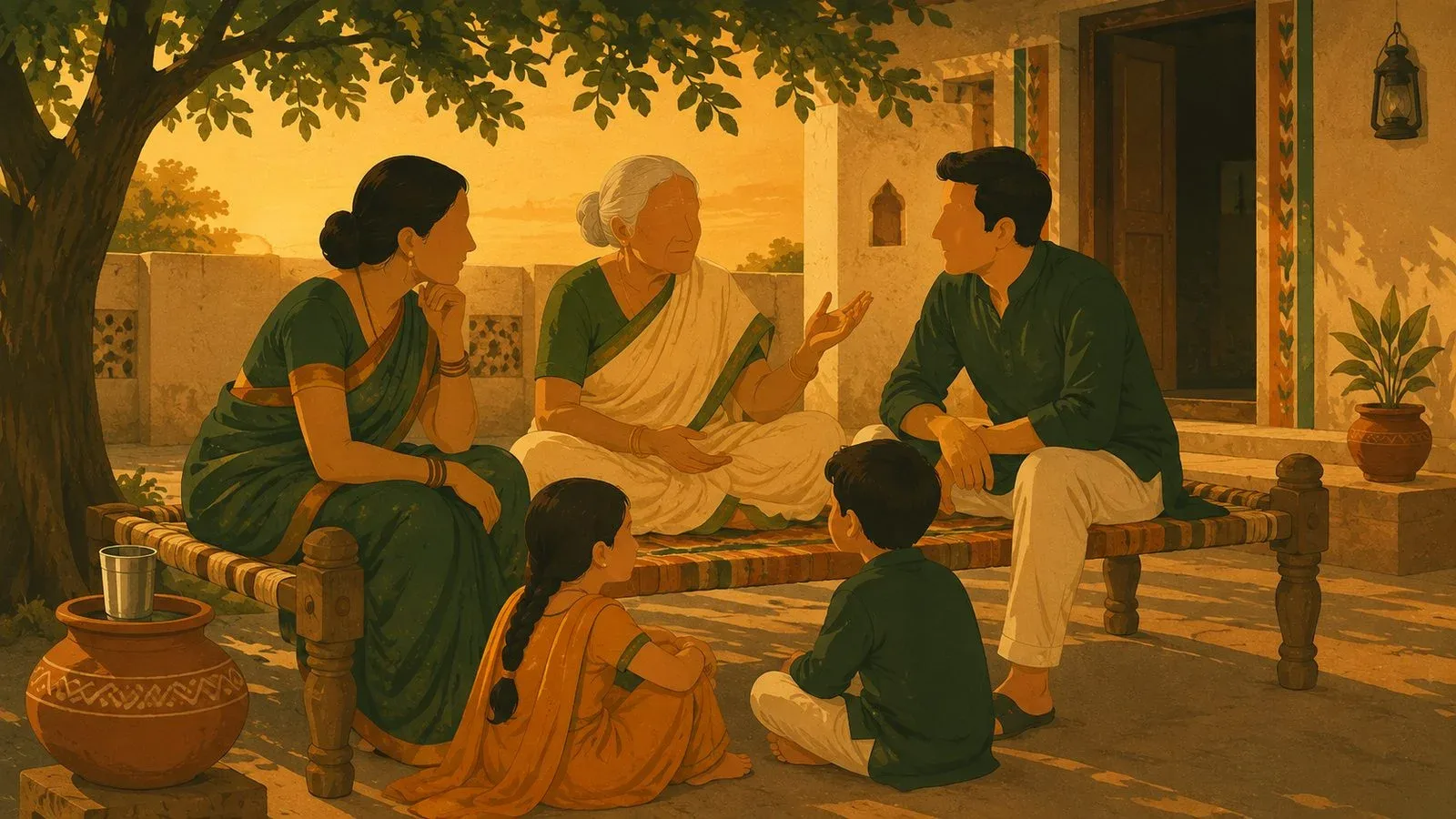
On three pages of this site we state that where scholarship funds are limited, girls’ education comes first. We have never explained why. A rule that affects real families deserves an argument, not a slogan — so here it is.
Start with the situation the rule is built for. A family has enough to keep one child in education past a certain point. Both children are capable. There is no villain in this story: the parents are doing arithmetic, not injustice, and the arithmetic is genuinely hard.
What happens in that moment, across a great many families and a great many years, is not evenly distributed. It is more often the daughter who is withdrawn. Sometimes because a son is expected to support parents later. Sometimes because a wedding is being saved for. Sometimes because the school is far and a girl travelling that distance worries people. These are not wicked reasons. They are ordinary, and their effect is cumulative.
A scholarship that ignores this pattern does not stay neutral. It follows the pattern. Neutral money, handed into an uneven situation, produces an uneven result — and we would have paid for it.
What the rule does and does not say
Most objections turn out to be objections to something we have not said.
Does this mean boys cannot apply?
No. Boys are fully eligible and will receive support. The priority applies only at the point where funds run out and a choice must be made between comparable applications.
Does a girl with weaker marks beat a boy with stronger ones?
No. Need and sincerity of effort are assessed first, for every applicant, on the same terms. The priority is a tie-breaker within that assessment — not a replacement for it.
Is this fair to our sons?
The honest answer: it treats a son and a daughter of equal need slightly differently, and we accept that. Not because sons matter less, but because the two are not starting from the same place. When they are, the rule stops being necessary and we will withdraw it.
Who decided this?
It is a founding policy of PalSamaj.org, published before a single rupee was awarded, so that no family can later claim it was invented to justify a particular decision. The Executive Committee may revisit it once seated, in the open, with members told.
Why this is also the better investment
Set fairness aside for a moment and treat it purely as a question of what a limited fund should buy.
An educated daughter changes the arithmetic of the next generation as well as her own. She marries later. She has fewer children, and is far more likely to keep them in school — including her own daughters. She earns, and in our experience she supports her parents, whatever the assumption was when the decision was made.
None of that is a reason to withdraw support from sons. It is a reason to think that a fund of our size, forced to choose, buys more with one decision than the other.
Register a student, or help fund one
Applications open when the fund exists. Members are told first.